×
3 simple steps to access

Remember to fill in all the fields

Resources Library > Strategy Guide

Private Equity Outlook 2025

A practical guide to help private equity professionals emerge from an underperforming year and create sustainable value for investors.
join Join thousands of professionals using this resource
Download Now for Free
resource
Download Now for Free
Trusted by
KKR logo
Babbel logo
RTL logo
Bosh logo
Microsoft logo
Philips logo
Solvay logo
C&A logo
Dr Oetker logo
EQT logo
ZF Group logo
Stihl logo
Dachser logo
LSG Group logo
Continental logo
Why downloading?
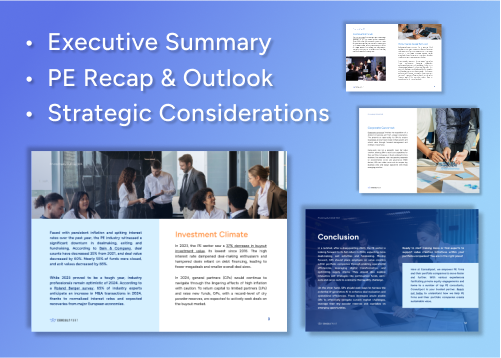
  • Executive Summary
  • Private Equity 2023 Recap & 2024 Outlook
  • Strategic Considerations
  • Introduction of the Private Equity Outlook 2024 Guide
  • Features of the Private Equity Outlook 2024 Guide
What you can use The Private Equity Outlook 2025 for

Despite an underperforming year, the outlook for 2024 is cautiously optimistic. With interest rates expected to stabilize, economic recovery on the horizon, and PE firms holding record levels of dry powder reserves, the stars are aligned for deal-making activities to return to normal. On the other hand, after postponing exit activities in 2023, PE firms are under pressure to distribute capital back to its investors, creating more urgency for them to actively seek exit opportunities in 2024. The lack of return will also make investors more selective when putting money into new funds, making fundraising more challenging. To navigate the aftermath of a difficult year, PE firms should make long-term value creation their top priority.

In addition, to prevent undesirable exist or insufficient capital, PE firms should explore Net Asset Value (NAV) financing and other alternatives to secure asset returns. They could also employ innovative exit strategies to overcome the valuation gap caused by market volatility. Options like continuation funds, performance-based earn-outs, and corporate carve-outs can offer viable paths to liquidity. Finally, technologies such as generative AI can play a pivotal role in enhancing deal analysis, optimizing operational efficiency in portfolio companies, and ensuring smoother post-acquisition integration. Amid economic uncertainties and cautious investor sentiment, this multi-faceted approach will be vital for PE firms to thrive in 2024.

Download Now for Free
Designed to Fit your Project Environment

Our guides and templates are built to be practical, flexible, and easy to implement. Each resource includes real-world frameworks, best practices, and use cases that you can apply immediately.

Tailored for fast-moving project teams and decision-makers, these guides help you structure and lead initiatives with clarity and confidence.

project environment
top-tier consultants top-tier consultants
Inspired by Independent
Top-Tier Consultants

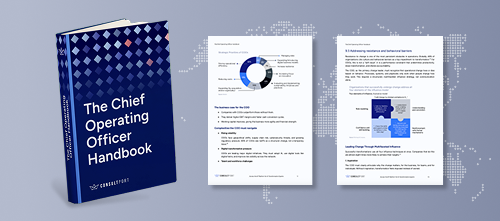
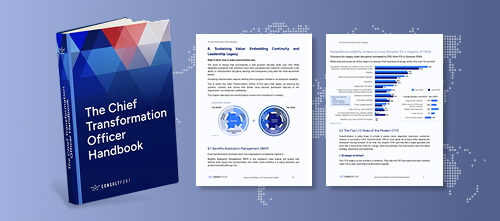
These resources are inspired from seasoned freelance consultants from the Consultport network.

Designed to help internal teams and freelance experts work seamlessly together, our tools bring top-tier consulting standards to your business, without starting from scratch.
FAQ
What is the state of private equity in 2024?
Faced with persistent inflation and spiking interest rates over the past year, the PE industry witnessed a significant downturn in dealmaking, exiting and fundraising. According to Bain & Company, deal counts have decreased 35% from 2021, and deal value decreased by 60%. Nearly 55% of funds were closed, and exit values decreased by 66%. While 2023 proved to be a tough year, industry professionals remain optimistic of 2024. According to a Roland Berger survey, 65% of industry experts anticipate an increase in M&A transactions in 2024, thanks to normalized interest rates and expected recoveries from major European economies.
What are some strategic considerations for PE in 2024?
In 2024, PE firms should focus on long-term value creation for their portfolio companies. In addition, to prevent undesirable exit or insufficient capital, PE firms should explore alternative financing approach such as Net Asset Value (NAV) financing. They could also employ innovative exit strategies to overcome the valuation gap caused by market volatility.
How are general partners enabling value creation activities within their portfolio companies?
General partners (GPs) are increasingly taking part in the day-to-day management and strategic decision-making of the portfolio companies, adopting a more hands-on approach to drive measurable improvements. The continuous focus on value creation will also pay off in terms of fundraising. Despite a competitive environment, GPs who have been diligent in executing value creation initiatives will continue to gain access to quality financing at reasonable cost.
Ready to start making deals and creating long-term value for your portfolio companies?
Download Now for Free