
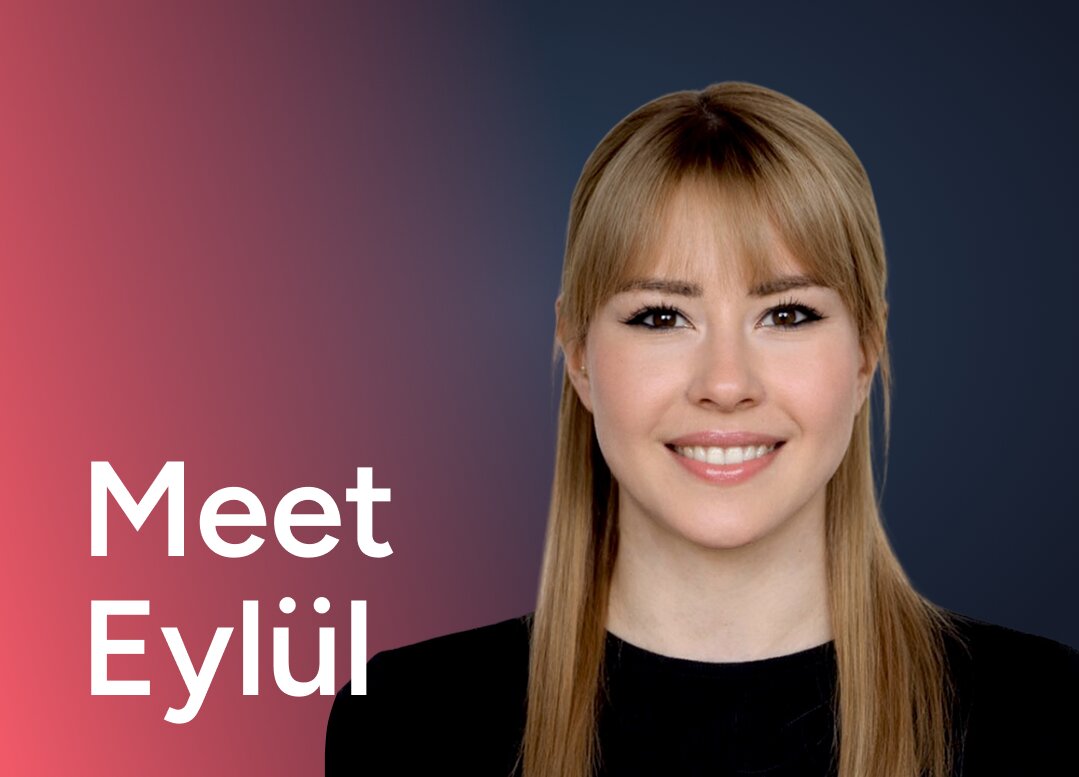
What’s your background, and how did you get started at Consultport?
I studied Interior Architecture and went on to complete a master’s in Media Spaces in Berlin. Both disciplines shaped my interest in experience design. In interior architecture, I thought about how someone moves through a room and what draws their attention. I ask similar questions in digital design. Where does someone look first when they open a page? What helps them find what they came for?
I joined Consultport in November 2019. It was my first job, and over time I had the chance to work across visual design, content, social media, and marketing campaigns. Seeing how those areas connect shaped the way I approach design today.
What does your role as Design Lead involve?
I shape how Consultport looks and communicates across its digital channels. That includes designing and improving visual assets, developing our social media communication strategy, creating content, and managing marketing campaigns.
A typical day might take me from refining a website section to reviewing the wording on a campaign asset or turning a longer article into a LinkedIn carousel. I often work on the copy and the design together. A layout can reveal that we’ve buried the most important point, and rewriting a heading can change what needs to stand out on the page.
Can you share a project that reflects how you work?
I’ve been working on improving the website experience at Consultport. I usually start by looking at what someone needs to understand when they arrive and what might make it harder for them to find what they’re looking for. Sometimes the change is as simple as bringing an important detail higher up or making the next step clearer.
The work also got me thinking about AI visibility. More and more people find companies through AI search tools and assistants. Those tools read a page’s text and structure, not its visual hierarchy. A colour or a placement can make something obvious to a person, but if the meaning only lives in the visuals, an AI tool may miss it. I like working through those details. Something as small as a clearer label can make a page easier to use and easier to interpret, for people and machines alike.
How has your role evolved since you joined?
When I moved into the Design Lead role, I got more ownership over how the individual pieces fit together. I still oversee campaigns and enjoy the details of a page, but now I also think about how a decision will work across channels. A visual idea might look good in a single post. The next question is whether it works on the website, in an email, or across a series of posts without every piece feeling the same.
Having been here since 2019, I can also see how things change after launch. I’ve worked on pages and formats we later revisited because the audience, the content, or the business had changed. That taught me to build with enough consistency that people recognise Consultport, and enough flexibility that the work can evolve.
What has kept you at Consultport all these years?
Mostly the room to grow. I started here straight out of university, and the team trusted me with real responsibility early on. As the company grew, my role grew with it. I never felt I had to leave to try something new, because there was always a new channel, format, or problem to take on.
I also value how closely we work across teams. Design here isn’t something added at the end. I work directly with business development, leadership, and the content team, so I understand the reasoning behind a project before I start designing it. That makes the work better, and much more interesting.
What advice would you give someone starting out in design and communications?
Get comfortable explaining your design decisions in plain language. If you can say who a page is for, what they need to take away from it, and why you’ve arranged it that way, it’s much easier to have a useful conversation about the work. It also helps you recognise when feedback points to something you missed.
Stay curious about what happens after you hand something over. How a design reads on a phone, how a piece of content gets adapted, what questions people still ask: all of it teaches you what to do differently next time.
